
If you have ever wished your kitty could narrate what’s going on behind those mysterious eyes, you are not alone. Families across Downey, CA tell us the same thing: “I wish I knew what my cat was thinking.” The good news is that cat body language is a rich, reliable conversation waiting to be understood. At Ashton Animal Hospital, our veterinarians teach simple techniques that help you decode everyday signals, strengthen trust, and know when it is time to schedule a wellness visit at our veterinary clinic.
Before long, you will be reading cat signals with confidence. This guide covers core feline behavior cues, how to apply them at home, and when changes in posture or expression might suggest a health issue. You will learn why whiskers and tails matter, what ear positions reveal, and how whole-body posture completes the message. By understanding cat behavior, you can support your feline companion’s emotional needs and keep them healthier, too.
A Vet’s Quick Start to Feline Communication in Downey, CA
Cats communicate primarily through movement and posture. Small shifts carry big meaning, and context is everything. Our Downey team encourages families to look at three layers at once: the situation, the body, and the pattern over time. When you consistently see the same cue in the same situation, you have discovered a reliable translation.
Fun fact: Cats have more than 20 muscles in each ear, which allows them to rotate like tiny, super cute satellite dishes. That precision helps them locate sounds.
Ears: The First Headlines
Ears are often the quickest indicators of mood.
- Forward and softly upright: Your feline friend is curious and comfortable. This is a great time to offer a toy or a training treat.
- Angled outward or swiveling: Caution or alertness. Your feline pal is collecting information before committing to a choice.
- Pinned flat: Fear or defensive aggression. Give space, lower the intensity of the situation, and avoid reaching toward the head.
Pair ear position with the rest of the body. Forward ears with a relaxed body usually mean curiosity, while forward ears with a stiff posture can signal a brewing pounce.
Eyes: Windows With Nuance
Cats use eye shape and pupil size to manage both light and emotion.
- Soft, almond-shaped eyes with normal pupils: Relaxed and content.
- Slow blink: Trust and friendliness. Return a slow blink to affirm the bond.
- Wide pupils in normal light: Excitement, fear, or hunting focus. Check the context to tell which one.
- Hard stare: Tension or challenge, especially in multi-cat homes.
If you notice persistent squinting, discharge, or frequent pawing at the eyes, schedule an exam. Eye discomfort can masquerade as a “mood.”
Tails: Antennas of Emotion
A tail broadcasts intention. Watch the base of the tail as well as the tip.
- Upright tail with a gentle hook at the tip: Friendly, confident greeting.
- Low, tucked tail: Fear or pain.
- Puffed tail: Startled defense. Your feline overlord is trying to look larger.
- Fast swish or whip: Irritation or conflict. Pause petting or play to de-escalate.
Some cats quiver the tail when they are excited to see you. Others prefer a calm, still tail during affection. Learn your kitty’s baseline to spot changes.
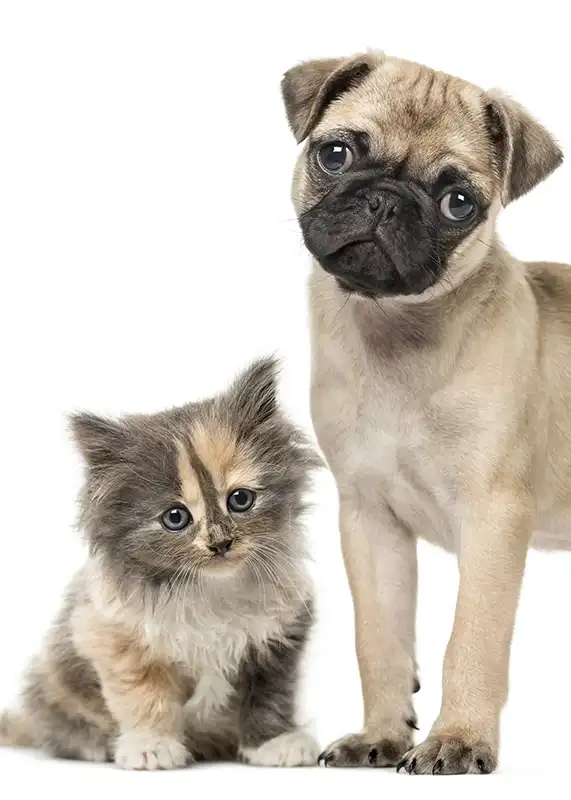
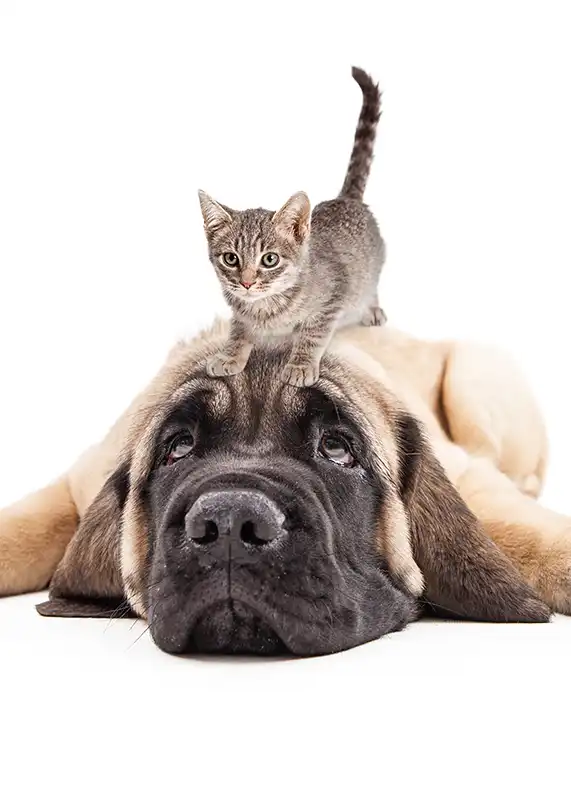
Of course, we all know that cats and dogs speak very different languages. Click here to read our blog on why dogs bark.
Dogs tend to wag their tails when they’re happy, which may be one source of misunderstanding between Fido and Fluffy. No matter what type of pet you have, it’s important to learn about their body language.
Whole-Body Posture: The Full Story
Reading one body part alone can mislead you. A complete scan tells the truth.
- Loaf position: Relaxed comfort with paws tucked, often after a meal.
- Crouched, tense muscles, ears angled back: Uncertain and ready to retreat.
- Sideways stance with arched back: Defensive posture.
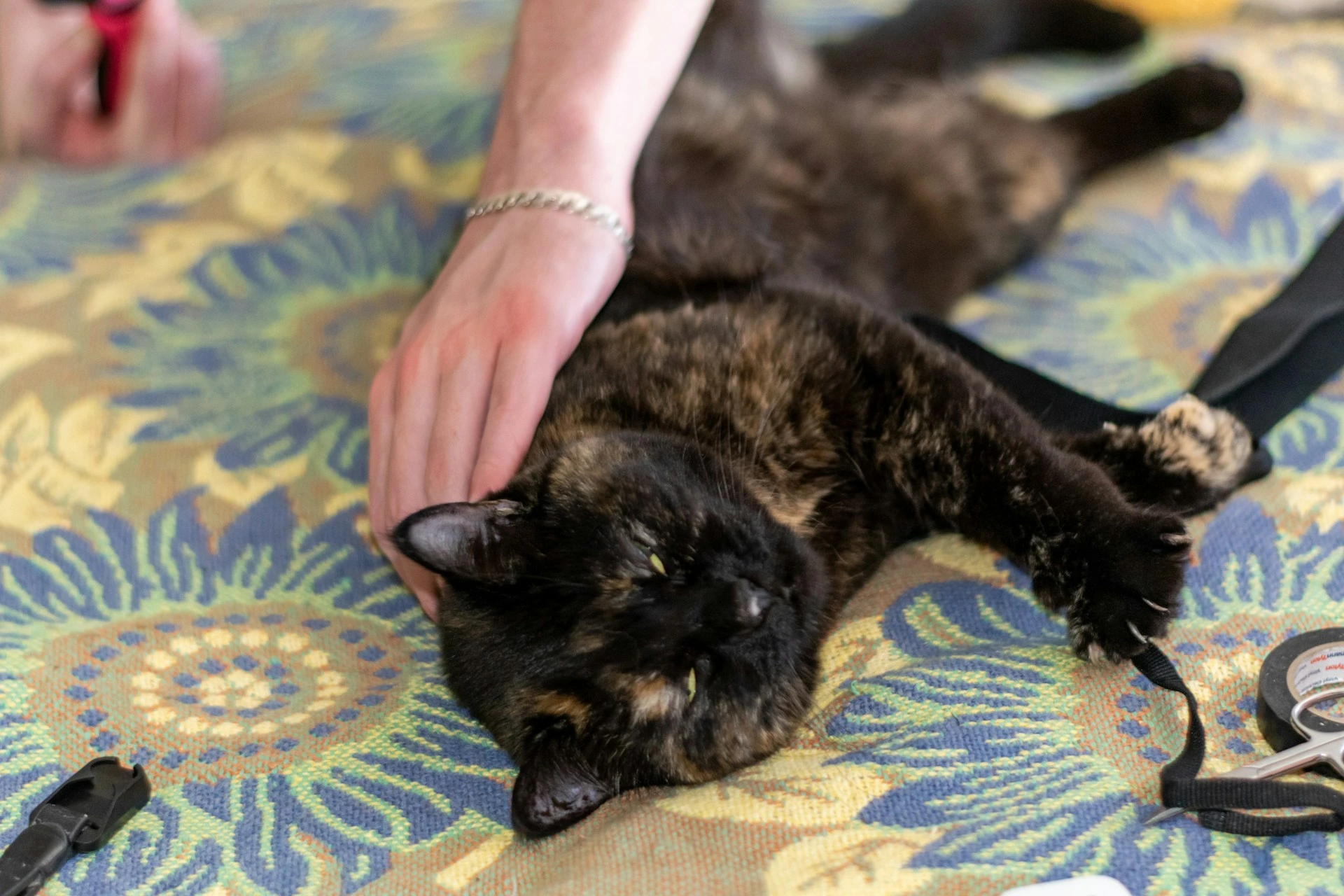
- Belly exposure: Indicates trust, but not always an invitation to touch. Many cats dislike belly rubs even when relaxed. Proceed with caution.
Changes in posture can also signal discomfort from arthritis, dental pain, or abdominal upset. If your kitty suddenly avoids jumps or hides more, our veterinarians can help determine if a medical issue is involved.
Cats are often stressed in new environments. PAWS has a good piece on helping Fluffy settle in, which you can read here. There’s a helpful article about Fluffy’s body language on the PetMD website here.
Using Cat Body Language in Daily Life
Handling and Grooming Without the Drama
If your kitty’s tail starts to twitch or ears creep backward while brushing, it is a polite request to pause. Offer a treat break, switch to a softer brush, and shorten the session next time. Cooperative care—rewarding calm participation—turns grooming into a team effort. Over time, your feline companion will anticipate rewards and tolerate longer sessions.
Introducing New People or Pets
First impressions matter. Set up a safe room with resources—litter box, water, food, perch, and hideout—so your resident cat can observe at a distance. Watch for feline behavior cues like a high tail and slow blink, which suggest readiness to explore. If you see flattened ears, a lowered body, or rapid tail swishing, slow the process.
Play That Respects Signals
Play that mirrors the hunting sequence—stalk, chase, pounce, capture—satisfies instinct and reduces frustration. If your kitty’s pupils widen and tail whips quickly, switch from hands to a wand toy to keep everyone safe. End each session with a successful “catch,” then a small snack. This sequence helps the nervous system downshift after excitement.
Multi-Cat Dynamics: Reading the Room
In multi-cat homes, quiet tension often shows up as blocking doorways, staring, or resource guarding. Subtle cues predict scuffles long before hissing begins. Provide duplicates of key resources in separate zones: litter boxes (one per cat plus one), water bowls, feeding spots, perches, and resting areas. Vertical space can reduce friction because each cat can claim a safe lookout.
If one cat persistently chases and another constantly hides, request a behavior consult. Our veterinary clinic can help you set up strategic barriers, scent-swapping routines, and play schedules that lower arousal.
Health Clues Hidden in Body Language
Cats mask discomfort well. Watch for these patterns and call our Downey team if they appear for more than a day or two.
- Decreased jumping or hesitation before leaping
- New hiding or avoidance of family interactions
- Excessive grooming in a single area, creating bald patches
- Sudden litter box changes or straining
- Reluctance to be picked up, especially around the belly or hips
Medical conditions like arthritis, dental disease, urinary discomfort, or GI upset can all shift body language. Early exams help us address problems before they worsen.
Reading Cat Signals: A Downey, CA Vet’s Cheat Sheet
- Look at the ears, eyes, tail, and posture together.
- Consider the situation: new noise, visitor, other pets, or time of day.
- Track patterns. If the same cue repeats in the same context, you have cracked that code.
- Reward calm behavior. Reinforce what you want more of.
- When in doubt, lower intensity—more distance, quieter sounds, slower movements.
Training for Cooperative Veterinary Care
We love teaching simple skills that make clinic visits smoother. Train your kitty to target a mat, touch a spoon or finger target, and step into a carrier voluntarily. Feed treats through the carrier door and keep the carrier visible at home rather than hidden in a closet. Familiarity lowers stress on appointment day.
Understanding Cat Behavior in Downey, CA—When to Call a Veterinarian
If your cat’s body language changes suddenly, or stress cues persist despite environmental tweaks, it is time to check in with our Ashton Animal Hospital team in Downey, CA. Because behavior and health are intertwined, a physical exam often reveals the “why” behind new signals. Our veterinarians will create a step-by-step plan that blends medical care with behavior support.
FAQs About Cat Body Language
Why does my cat slow blink at me?
A slow blink is a friendly signal and a sign of trust. Return the gesture to reinforce your bond.
What does a puffed-up tail mean?
A puffy tail usually signals fear or startlement. Reduce stimulation and/or give your feline pal space.
Why does my cat roll onto their back but swat my hand?
Belly exposure can indicate relaxation, but many cats dislike belly handling. Pet the cheeks or shoulders instead.
How can I tell play from aggression?
Play features bouncy movement and inhibited claw or bite use. Aggression shows stiff bodies, flattened ears, hard stares, and rapid tail swishes. Separate and let everyone calm down if you see those signs.
Schedule an Appointment at Our Downey Veterinary Clinic
Curious about cat body language and how it relates to your kitty’s well-being? Instead of searching for a vet near me, contact Ashton Animal Hospital in Downey, CA. Our compassionate veterinarians can help you interpret feline behavior cues, tailor enrichment, and address medical concerns that may be shaping your cat’s signals. Call today to schedule an appointment with our animal hospital and help your feline bestie feel understood.
Click here to visit our Service page and find out a bit more about our clinic and the pets we treat.
This blog is intended for educational purposes. Always consult your veterinarian for diagnosis and individualized treatment recommendations for your cat.